How Real-Time Financial Data Is Changing Investing
By Kash · · 6 min read
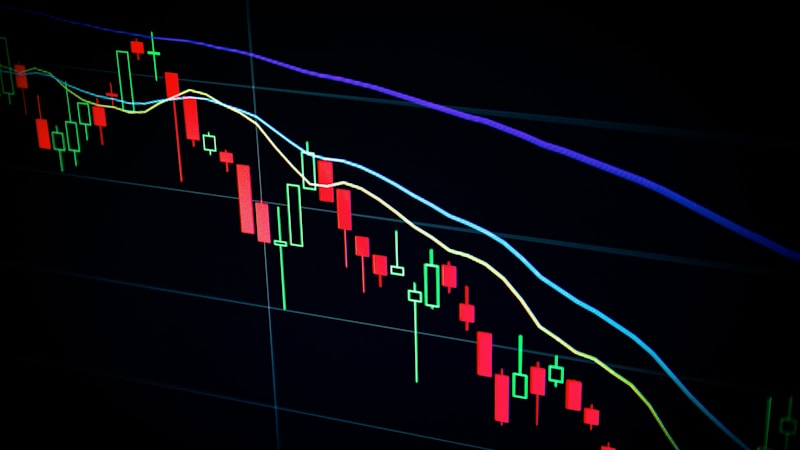
Real-time data combined with AI is revolutionizing how investors make decisions. Learn how to leverage this technology for better returns.
Educational overview only — not a recommendation to buy or sell any security. Markets, fees, and investor protections vary by country. UK readers should read the FCA’s guidance on avoiding investment scams before acting. Capital is at risk.
Markets have always moved fast in the headlines; what changed in the past decade is how fast you can see them move on your phone. Live prices, earnings filings, macroeconomic data releases, and news wires can refresh in seconds on mainstream platforms. That is genuinely useful for clarity — and genuinely risky if it trains you to react on adrenaline instead of on a written investment plan.
What actually changed — and what did not
The data revolution in investing is real, but it is worth being precise about what changed and what the implications are for ordinary investors.
Speed — mainstream market data feeds are near-live for retail investors on most platforms. This is a meaningful improvement from the delayed quotes or end-of-day prices that were standard for non-institutional investors even a decade ago. However, professional institutional traders still operate on microsecond advantages that are irrelevant to long-term investors and impossible for retail investors to compete with.
Volume and accessibility — screeners that used to require Bloomberg terminal access (£20,000+/year) are now available on free platforms like Finviz, Koyfin, and Seeking Alpha. This genuinely democratises research access.
Alternative data — hedge funds and institutional investors pay for non-traditional datasets: satellite imagery of retailer car parks, credit card spend aggregates by merchant category, shipping traffic data. Retail access to these datasets remains limited and expensive. When media articles suggest retail investors can use "the same AI as Wall Street," they usually mean screeners and news aggregators — not proprietary alternative data feeds.
Narrative risk — the real danger of faster data for retail investors is not missing a signal; it is reacting to too many of them. Research consistently shows that increased trading frequency correlates with worse outcomes for retail investors, largely because of transaction costs and behavioural biases. The same technology that makes research faster also makes panic-selling faster.
The practical benefit for individual investors
The genuine value of improved data access for non-professional investors is not trading edge — it is better information hygiene:
Portfolio visibility
Modern portfolio trackers (Sharesight, Morningstar, interactive investor in the UK) make concentration risk visible in a way that paper statements never could. Seeing that one stock now represents 35% of your portfolio, or that your "diversified" allocation actually has heavy sector overlap, prompts rebalancing conversations that would otherwise be missed.
Fee transparency
Platforms that show your total annual cost in pounds — not just percentage — and that break down underlying fund OCFs alongside platform charges have meaningfully improved. Investors who can see clearly that their portfolio costs 1.4% per year have better information to consider than those seeing only a headline platform fee.
Access to primary sources
Regulatory filings (UK: RNS announcements via the London Stock Exchange; US: SEC EDGAR) are now searchable and browsable without institutional access. For investors who want to understand what a company is actually reporting versus what a financial summary claims, this is a genuine improvement.
Rules-based alerts
Setting price or allocation alerts when you are calm — "tell me if this position falls 8% from purchase price" — allows you to enforce a pre-written plan without constant monitoring. This reduces the emotional work of investing without removing your judgment from the actual decision.
Tools retail investors actually use
A realistic survey of what is genuinely useful for UK retail investors in 2026:
Free screeners and research:
- Finviz (US-focused but useful for global concepts): fundamental and technical screening with heat maps
- Koyfin (freemium): financial data, charts, and earnings calendars across global markets
- Macrotrends: long historical data series for individual stocks and macroeconomic indicators
UK-specific platforms:
- London Stock Exchange (lse.co.uk): RNS announcements, official filings, price data
- Companies House (gov.uk): corporate filings, ownership structures, accounts for UK companies
- The Motley Fool UK / SharePad: retail-focused analysis and screening
Portfolio tracking:
- Sharesight (freemium): multi-account tracking, performance reporting, dividend tracking, tax reports
- Your broker’s built-in tools: most UK brokers now provide portfolio analytics and cost breakdowns
None of these tools make predictions. They improve visibility of what you already own and what you are considering — the decision remains yours.
What professional institutions do differently (and why it usually does not apply to you)
Institutional investors use quantitative strategies that exploit small, systematic edges across thousands of positions, often holding for very short periods. These edges depend on:
- Execution speed at infrastructure that retail investors cannot access
- Position sizing across portfolios too large for any single retail investor to replicate
- Proprietary data that is not publicly available
- Risk management teams continuously monitoring models for breakdown
The reason this matters for retail investors: strategies that work institutionally often do not transfer to individual portfolios, where transaction costs, tax events from frequent trading, and the inability to diversify across hundreds of positions all change the maths significantly.
For most people, the evidence from academic research (particularly the work of researchers like John Bogle, Eugene Fama, and William Sharpe) still supports a simple conclusion: low-cost, diversified, long-term passive investment outperforms most active approaches after costs and taxes. Better data access makes implementing this simpler — it does not fundamentally change the conclusion. For a deep dive into how AI-driven trading tools perform against this benchmark, see our analysis of whether an AI co-pilot can beat the market.
Key risks to understand
Recency bias: recent market data is always clearest in your dashboard. Investors overweight recent performance and underweight long-run patterns. Real-time data makes this cognitive bias easier to act on, not harder.
Narrative capture: financial media is designed to create urgency. Real-time data gives that urgency numbers to attach to. Having a written investment policy — what you own, why, and what would actually change your view — is more protective than any data tool.
False precision: a six-decimal-place valuation on your portfolio app is precise but not necessarily accurate. Models used to estimate "fair value" have large uncertainty ranges. Treating AI-generated valuations as fact rather than one input among many is a common error.
Conclusion
The investors who tend to sleep best are not always those with the fastest dashboards — they are the ones who know what they own, what it costs, and why they own it. Real-time data helps when it supports a written plan. It cannot replace the plan, and it cannot protect against decisions made from fear or excitement.
For UK investors, two bookmark-worthy resources that cut through noise: the FCA’s scam-protection and firm-checking guidance for fraud, risk, and how to check a firm; and the MoneyHelper investing section for plain-language guidance before you use any platform. If you’re interested in how sustainability considerations fit into a data-driven portfolio, our overview of climate fintech and ESG investing AI covers how machine learning is transforming that space in 2026.