AI Health Agents: 2026 and Proactive Wellness Planning
By Kash · · 10 min read
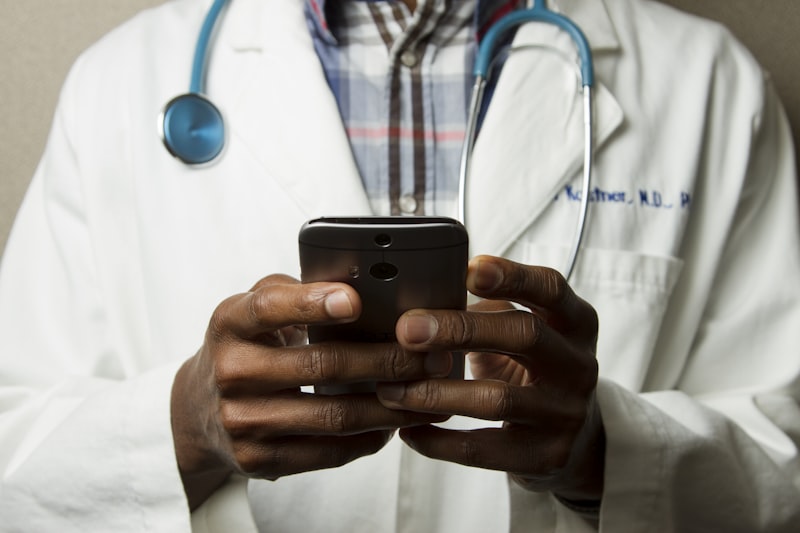
AI health agents now merge wearable data, bloodwork, and your calendar to act as 24/7 wellness concierges — shifting from passive tracking to proactive intervention before burnout arrives.
This article is for general information only. It is not medical advice. Always consult a qualified healthcare professional before changing your health routines or acting on any data from wearable devices or AI tools.
Key takeaways
| Shift | Old model | New model |
|---|---|---|
| Data use | Passive tracking (what happened) | Agentic planning (what to do next) |
| Decision burden | Falls on you | Shared with your AI coach |
| Intervention timing | After symptoms appear | 24–48 hours before you feel it |
| Data sources | Single device | Blood, wearables, calendar, nutrition — unified |
For the last decade, the wellness industry was obsessed with data. We wore rings that told us we slept poorly and watches that counted our steps. But there was always a missing link: the burden of choice. You knew your Readiness Score was low — but you still had to decide whether to push through your workout or change your meal plan.
In 2026, that decision fatigue is disappearing. We have entered the era of the Agentic AI Health Coach — autonomous systems that do not just report on your past but actively architect your future.
What is an agentic AI health coach?
An "agent" differs from a standard app because it has agency. While a traditional fitness app waits for you to log a meal, an agentic AI health coach works in the background. It does not just track your steps — it negotiates your life.
These personalised longevity agents synthesise three distinct data streams:
- Biometric streams — real-time data from sleep rings, continuous glucose monitors (CGMs), and heart rate sensors
- Biological baselines — periodic inputs from bloodwork, DNA sequencing, and gut microbiome analysis
- Logistical context — your digital calendar, local weather, and grocery delivery apps
By merging these, the AI stops being a reporter and becomes an executive assistant for your body.
From measurement to proactive intervention
The defining shift of 2026 is the move toward proactive intervention. In the past, you waited until you felt burnt out to take a rest day. An agentic coach uses AI wearable predictions to see burnout coming 48 hours before you feel it.
The rest day revolution
Imagine your AI coach notices a subtle downward trend in your Heart Rate Variability (HRV) combined with a restless sleep cycle. Simultaneously, it sees that your calendar has three back-to-back high-stress meetings tomorrow.
Instead of waiting for you to crash, the agent intervenes:
- Automatically reschedules your HIIT session to a restorative yoga walk
- Adjusts your smart home lighting to trigger melatonin production 20 minutes earlier
- Sends a soft nudge to reduce your caffeine intake after 2pm
This is not just tracking. It is a pre-emptive strike against fatigue.
Negotiating your nutrition: the grocery list shift
One of the most practical applications of autonomous wellness planning is in the kitchen. We are moving away from generic calorie counting toward metabolic optimisation.
If your CGM detects frequent blood sugar spikes after your current "healthy" breakfast, the AI agent does not just send you a notification. It:
- Analyses the glucose response pattern
- Cross-references it with nutritional deficiencies from your latest bloodwork
- Updates your digital grocery cart with a stabilised, high-protein alternative
When you open your delivery app, the right ingredients are already there. The agent has negotiated your nutrition based on your body's real-time response to food.
The technology powering 2026 longevity agents
Three technological breakthroughs have matured this year to make these agents possible:
1. Cross-platform integration
The "walled gardens" of health tech are crumbling. Your Oura data, Apple Health metrics, and lab results now flow into a unified Health Intelligence Layer that the AI uses to build your complete profile — rather than fragmented islands of data.
2. Edge processing and privacy
Modern personalised longevity agents process most sensitive health data locally on your device. This edge AI approach ensures your most intimate biological data stays private while still delivering high-quality insights. It is an important consideration for anyone weighing the privacy trade-offs of sharing health data with cloud services.
3. Predictive generative models
We are now using Small Language Models (SLMs) specifically trained on medical literature and longevity protocols. These models can explain the why behind an intervention — helping you understand the link between your magnesium levels and your REM sleep, rather than simply issuing instructions.
Fitness apps vs agentic health coaches: a direct comparison
| Feature | Basic fitness apps (2020–2024) | AI health agents (2026) |
|---|---|---|
| Data focus | Past performance (historical) | Future planning (predictive) |
| User input | Manual logging required | Autonomous data synthesis |
| Action | Notifications and nudges | Execution and scheduling |
| Integration | Isolated sensors | Blood, sleep, calendar — unified |
| Goal | General fitness | Targeted longevity and prevention |
Practical steps to adopt an AI health agent
If you are ready to move beyond basic tracking, here is how to set up your digital health concierge:
1. Consolidate your data first Use a central hub that allows different devices to communicate. An agent is only as good as the information it can access. Many platforms now offer single-consent data-sharing agreements that cover wearables, labs, and apps in one place.
2. Upload your biological baselines An agentic coach needs more than heart rate. Uploading recent bloodwork or DNA data gives the AI a biological map from which to personalise its advice. Some UK-based services — such as Thriva — allow you to access and export your own blood results.
3. Grant calendar access deliberately For an AI to plan your tomorrow, it needs to know what your tomorrow looks like. Integrating your calendar allows the system to suggest recovery windows during busy workdays and flag scheduling conflicts before they become health ones.
4. Always review the "why" Use the explain feature whenever it is available. Understanding why your coach suggested a specific change builds long-term habits that become second nature — and helps you catch errors or assumptions that do not match your life.
5. Keep a human in the loop These agents are support tools, not replacements for clinical care. If your data flags something concerning — an irregular heart rhythm, persistent HRV decline, or unexplained glucose patterns — speak to a GP or qualified health professional. For more on what wearables can and cannot detect, our article on AI wearables predicting illness before you feel it covers the research on early illness detection in depth.
What to watch: the limits still matter
Agentic AI health coaches are genuinely powerful. But the 2026 landscape still has real constraints:
- Device accuracy varies: consumer wearables have improved, but they are not medical-grade monitors. HRV and SpO2 readings should be treated as trends, not clinical measurements.
- Correlation is not causation: an agent may link your sleep dip to a late meal, but many variables affect sleep. Treat suggestions as hypotheses to test, not prescriptions.
- Data quality determines advice quality: if your bloodwork is out of date or your wearable has a week of missing data, the agent's recommendations will reflect those gaps.
- Privacy terms differ significantly: before connecting sensitive health data to any platform, read their data retention and sharing policies carefully.
The end of one-size-fits-all wellness
The transition to agentic AI health coaching represents a move toward true bio-individuality. We are stepping away from generic advice — "drink eight glasses of water, aim for 10,000 steps" — toward a world where your wellness plan is as unique as your physiology.
In 2026, the most effective approach to health and longevity is not tracking the most data. It is having the best systems to act on it — proactively, personally, and with enough context to make the right call before you feel the cost.
The shift from measurement to proactive planning is already happening. The question is whether you are positioned to benefit from it. For a look at how longevity science and biological age testing fit into this picture, our piece on longevity science and AI in 2026 explains what epigenetic clocks actually measure and what you can do with the results today.
Further Reading
- AI Fitness Coaching in 2026: Why Your AI Personal Trainer Knows Your Body Better Than You Do
- Sleep Optimization Technology in 2026: Why Right Now Is the Best Time in History to Finally Fix Your Sleep
- The Gut-Brain Axis in 2026: What Your Microbiome Is Doing to Your Mind, Your Mood, and Your Health
- The 3 AM Therapist: Is AI the Cure for Our Mental Health Crisis or a Digital Band-Aid?